
Parent Tips
How Parents Can Support Without Coaching From the Cart
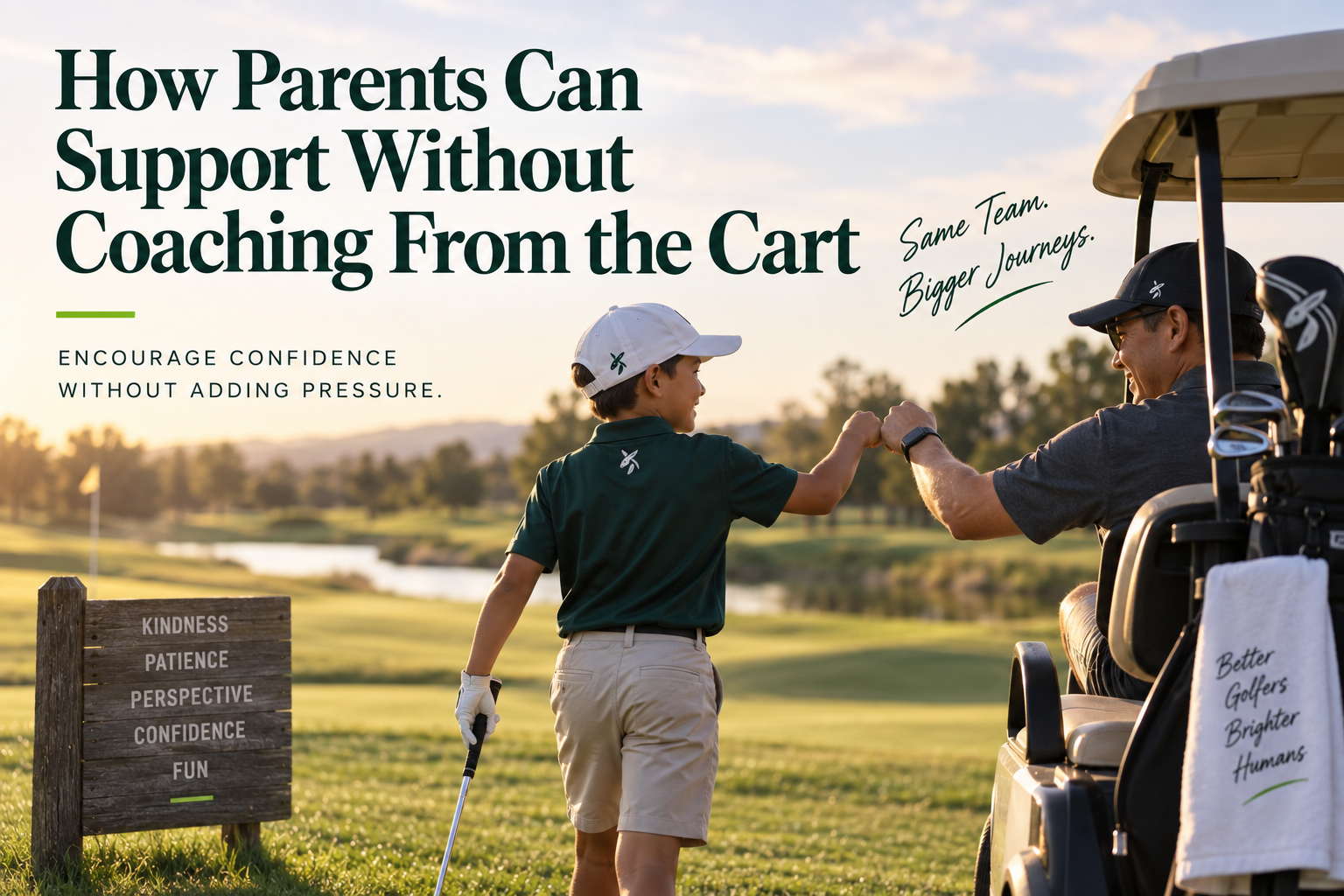
You love your kid. You want them to succeed.
So when you see them lining up a shot with the wrong club, it takes everything in you not to shout "Use your 8-iron!" from the cart.
But here's the hard truth: coaching from the sideline usually hurts more than it helps.
Why Cart Coaching Backfires
When a parent gives swing tips or club suggestions during a round, three things happen:
1. The junior stops trusting their own judgment. They start looking back at the cart before every shot, rather than committing to their own decision.
2. Pressure increases. Now they're not just trying to hit a good shot — they're trying to please you too.
3. The fun fades. Golf becomes a performance review instead of an adventure.
Scottie Scheffler's advice - Please watch
World No. 1 Scottie Scheffler talked about exactly this at his press conference ahead of the 2026 PGA Championship.
When asked for advice for young golfers and their parents, he described his coach Randy Smith's very first instruction to his dad:
"One of the first things that Randy taught my dad is when Scottie gets to the golf course, he takes his own bag off the golf cart, he sets up his own area. He doesn't need you out there; this is his thing," Scheffler said.
His parents leaned into that.
"I think they did a good job of guiding me along and helping me when I needed help, but not pushing me to be anything other than a good student and a good person," Scheffler said. "It wasn't all about golf with them."
His mom, Diane, took it a step further — she never asked him what he shot.
"If you want me to know what you shot, you'll tell me," she told him. "I don't have to ask you what you shot."
That's not indifference — it's trust. And it's exactly the kind of hands-off support that lets a junior own their game instead of performing it for someone else.
What to Do Instead
The best golf parents do three things really well:
Be the Energy Manager
Your junior's energy and mood on the course are contagious.
If you're calm, positive, and enjoying the walk, they will be too. If you're tense, frustrated, or visibly disappointed, they'll feel that weight on every shot.
If they duff a chip, your face should show nothing — not sympathy, not frustration. Just move to the next shot with them.
Your job is to set the emotional tone, not the strategy.
But also be conscious enough to recognize their feelings if things do start going poorly. We have some great tips on validating your junior's feelings in this article.
Ask Questions, Don't Give Answers
Instead of "You should have used your pitching wedge," try "What were you thinking on that club choice?"
This does two things: it shows you're interested, and it helps your junior develop their own decision-making process.
Great questions for the car ride home:
- What was your favorite shot today?
- Was there a moment you felt really focused?
- What would you do differently next time?
Sports psychologist Dr. Bob Winters — known as "The Confidence Doctor" after 50 years working with junior, college, and tour golfers — takes it a step further.
On a recent episode of The Golf Parent podcast, his advice for the drive home was to hold off on questions altogether at first.
Give your junior a little time to decompress before talking about the round — and if they don't bring it up, that's fine too. Let them come to you when they're ready to talk.
And what if your junior isn't a big talker?
That's exactly what JrCaddie's "reflect" section is for.
After each hole, your junior rates themselves on questions like "Did you stay calm after any bad shot on this hole?"
This way there's no pressure from a parent involved, no performance for an audience, just an honest check-in with themselves.
Most of these moments — the calm response to a bad lie, the smart lay-up instead of the hero shot — occur out on the course, far from the cart, so giving them the tools to check in with themselves is confidence-building.
Celebrate the Process
Don't just celebrate birdies.
Celebrate the moment your junior stayed calm after a bad hole. Celebrate when they made a smart decision, even if the result wasn't perfect. Celebrate when they encouraged a playing partner.
These moments build character — and they're the reason your junior will want to keep playing.
The Rule of the Parking Lot
Here's a simple guideline: golf instruction happens at the range or with their coach.
On the course, your only job is to be their biggest fan.
Save the technique talk for after the round — or better yet, let the coach handle it entirely. Your relationship with your junior is more important than any swing tip.
Your Junior Needs a Fan, Not a Coach
The juniors who stick with golf long-term almost always have one thing in common: supportive parents who let them own their experience, just like Scottie Scheffler.
Be present. Be positive. Be patient.
That's the best thing you can do for your junior golfer.